


The short answer
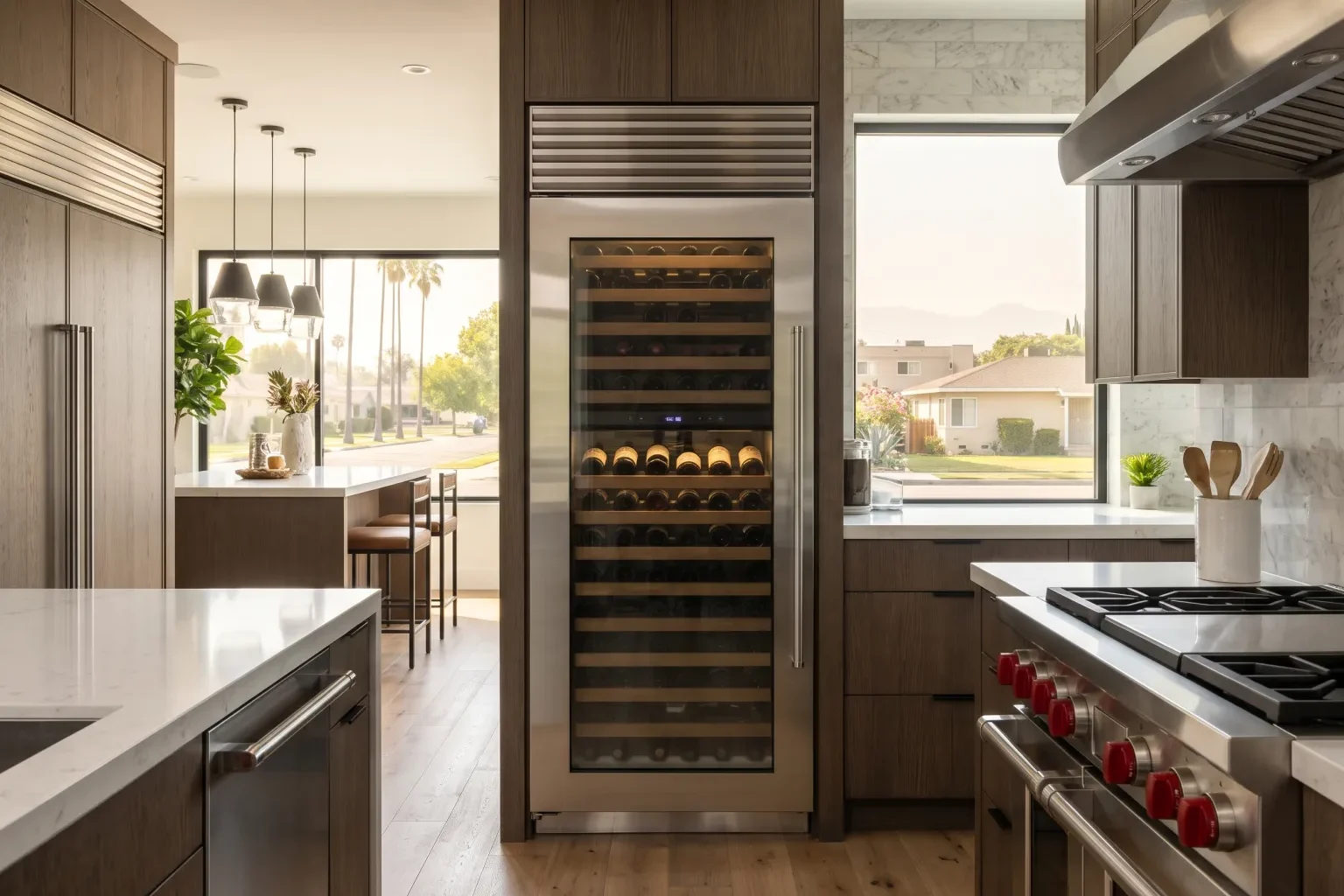
Most wine cooler problems, including warm zones, frost, error codes, noisy fans and water under the unit, come from a fixable part such as a fan, sensor, door seal, control board or clogged drain. On a built-in Sub-Zero, Viking or Thermador unit, repair is usually worth it when the sealed system and cabinet are sound. A technician can confirm the cause with an in-home diagnosis before you decide.
A wine cooler that drifts a few degrees warm, frosts over, or starts cycling loudly puts every bottle inside at risk. Gleadale Appliance services repairs built-in and freestanding wine storage for homeowners in Glendale and surrounding communities, with a focus on high-end units. We work on Sub-Zero wine storage first and foremost, along with Viking wine cellars and Thermador wine columns, and we regularly service wine units installed beside Wolf ranges and cooktops. We are an independent repair company, not affiliated with any manufacturer. This page explains the problems we see most, what our technician looks at, how the brands differ, and how to decide between repairing and replacing.
Issues we fix
Wine storage is less forgiving than a regular refrigerator. Wine keeps best at a steady temperature, so even small swings or humidity problems are worth addressing early. These are the symptoms owners call us about most often:
- Not cooling, or one zone running warmer than its setting
- Temperature swinging up and down through the day
- Frost or ice building up on the back wall or evaporator cover
- Water pooling inside the cabinet or on the floor below the unit
- Error codes, flashing displays or controls that won't respond
- Compressor running constantly or short-cycling on and off
- Loud fan noise, rattling, buzzing or clicking
- Condensation or fogging on a glass door
- Doors that won't seal, sag on their hinges or don't close fully
- Interior lights that stay on or won't turn on
What our technician checks on a built-in or professional-style unit
Built-in wine units are designed to breathe through a front grille, and they sit tight inside custom cabinetry. Many cooling complaints start with airflow, so we begin there: the condenser coil and grille for dust and pet hair, the condenser fan, and whether anything inside the cabinet opening is trapping heat.
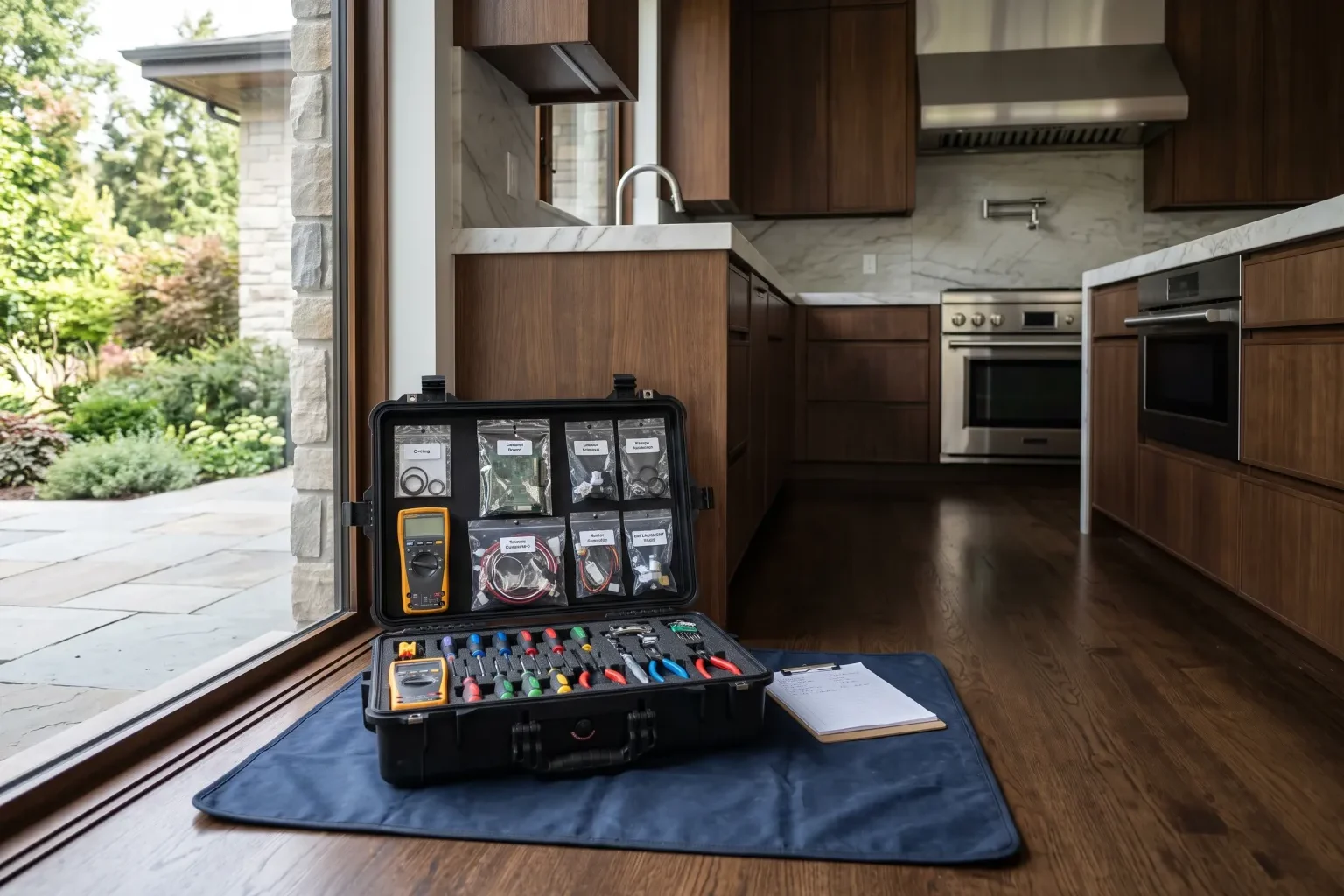
From there we test the system step by step. We verify temperature with our own probes in each zone rather than relying on the display. We check the evaporator fan and the defrost cycle, look for ice blocking airflow, and test the temperature sensors and thermistors against their expected readings. We inspect door gaskets, hinges and the door-closing mechanism, clear and check the defrost drain and drain pan, and review the control board and user interface for stored fault codes. If the evidence points to the sealed system, such as the compressor, a refrigerant leak or a restriction, we tell you plainly and explain what that repair involves.
Placement matters too. Inland parts of the Los Angeles area run much hotter in summer than the coast, and fall Santa Ana winds bring hot, dry spells. A unit in a warm room, a sunny spot or near a range has to work harder, and we factor that into the diagnosis.
How Sub-Zero, Viking, Wolf and Thermador units differ
Sub-Zero wine storage typically uses dual or multiple temperature zones with separate sensing and airflow for each. Because those zones are managed by the control system, a single failed sensor, fan or damper can make one zone run warm while the other is fine. Their tinted glass doors and heavy hinges also put steady demand on door seals and alignment, so we check those on every visit.
Viking wine cellars are often undercounter or professional-style models that vent through the front toekick. When the front grille or condenser gets clogged, or the unit is boxed in more tightly than intended, the compressor and condenser fan are the parts that feel the strain. Door gaskets and hinges on frequently opened undercounter units also see a lot of wear.
Thermador wine columns are tall, panel-ready units built flush into cabinetry, sometimes paired with matching refrigerator and freezer columns. Electronics, interior fans and the panel-mounted doors are where we tend to focus, and because these columns sit fully enclosed, access and careful removal are a bigger part of the job.
Wolf builds cooking equipment rather than wine storage, but Wolf ranges, ovens and cooktops are often installed a few feet from a wine column or undercounter unit. Heat from cooking and from nearby ventilation can raise the temperature around a wine cooler, so when the two share a wall or run of cabinets, we look at how that layout affects cooling.
Tell us what your appliance is doing.
Repair or replace a high-end wine cooler?
For a built-in premium unit, repair is usually the practical choice when the cabinet, doors and sealed system are in good shape. Fans, sensors, control boards, gaskets, hinges and drain problems are all replaceable parts, and fixing them keeps the unit that was fitted to your cabinetry in place.
Replacement starts to make sense when the sealed system has failed on an older unit, parts are no longer available, or the cabinet has rust, cracked liners or structural damage. Keep in mind that a new built-in unit may not match your existing cutout or custom panels exactly, which can add carpentry to the project. We give you an honest read on the condition of the unit so you can weigh the options with real information.
What affects the cost of a wine cooler repair
We don't quote prices before we've seen the unit, because the cost depends on what's actually wrong. The main factors are the fault itself, the parts needed and how easy the unit is to reach.
A dirty condenser or clogged drain is a very different job than a control board or a sealed-system repair. Parts for premium brands vary in cost and availability, and some need to be ordered. Access is a real factor on built-in units: a wine column or undercounter cellar set into custom cabinetry, with fitted panels and trim, takes more care and time to pull out and reinstall than a freestanding unit. After the diagnosis, we explain the repair and the cost before any work begins.
How a service visit works
When you contact us, tell us the brand, model and serial number if you can find them, usually on a label inside the cabinet, along with what you've noticed and when it started. That helps the technician arrive prepared.
At the visit, the technician confirms the symptoms, measures temperatures, checks airflow and components, and reads any fault codes. You get a clear explanation of the cause and the recommended repair. If we have the part on hand, we can often complete the work the same day. If a part has to be ordered, we schedule a return visit to finish the job. Before we leave, we confirm the unit is cooling properly and share any tips on placement or maintenance that can help it run steadily.