


The short answer
Most outdoor grill problems come from ignition parts, clogged burners, gas valves or regulators, and wear from heat and weather, and they are usually repairable on a high-end built-in unit. A technician inspects the gas supply, ignition and burners, explains what failed, and recommends repair or replacement based on the condition of the firebox and housing.
A built-in grill is often the center of an outdoor kitchen, so when a burner won't light or the heat runs uneven, the whole setup feels out of commission. Gleadale Appliance services repairs professional-style outdoor grills and the equipment around them for homeowners in Glendale, Burbank, Pasadena, La Cañada Flintridge and nearby communities. We work on premium brands, including Sub-Zero outdoor refrigeration that often sits next to the grill, Viking and Wolf outdoor grills, and Thermador pro-style cooking equipment. We are an independent repair company, not affiliated with any manufacturer. Our goal is simple: find the actual fault, explain it plainly, and fix it so you can cook again.
Issues we fix
Outdoor grills live a harder life than indoor appliances. Dust, pollen, grease, sprinkler overspray and long dry summers all take a toll. Inland areas like Glendale get much hotter in summer than neighborhoods near the coast, and fall Santa Ana winds can push debris into burner ports and venturi tubes. These are the problems homeowners call us about most:
- Burners that won't ignite, or that click without lighting
- Weak, yellow or lazy flames instead of a steady blue flame
- Uneven heat across the grates, with hot and cold zones
- A grill that can't reach searing temperature
- Flames that go out in a breeze or when another burner is turned on
- Infrared sear or rotisserie burners that don't glow or heat up
- Control knobs that are stiff, loose or won't turn to the ignite position
- Ignition modules that are dead or spark constantly
- Grill lights, rotisserie motors or other electrical features that stop working
- Flare-ups or grease fires caused by a clogged drip tray or worn flame tamers
- A gas smell near the grill or the supply connection
- Sub-Zero outdoor refrigerators in the same island that stop cooling or build up frost
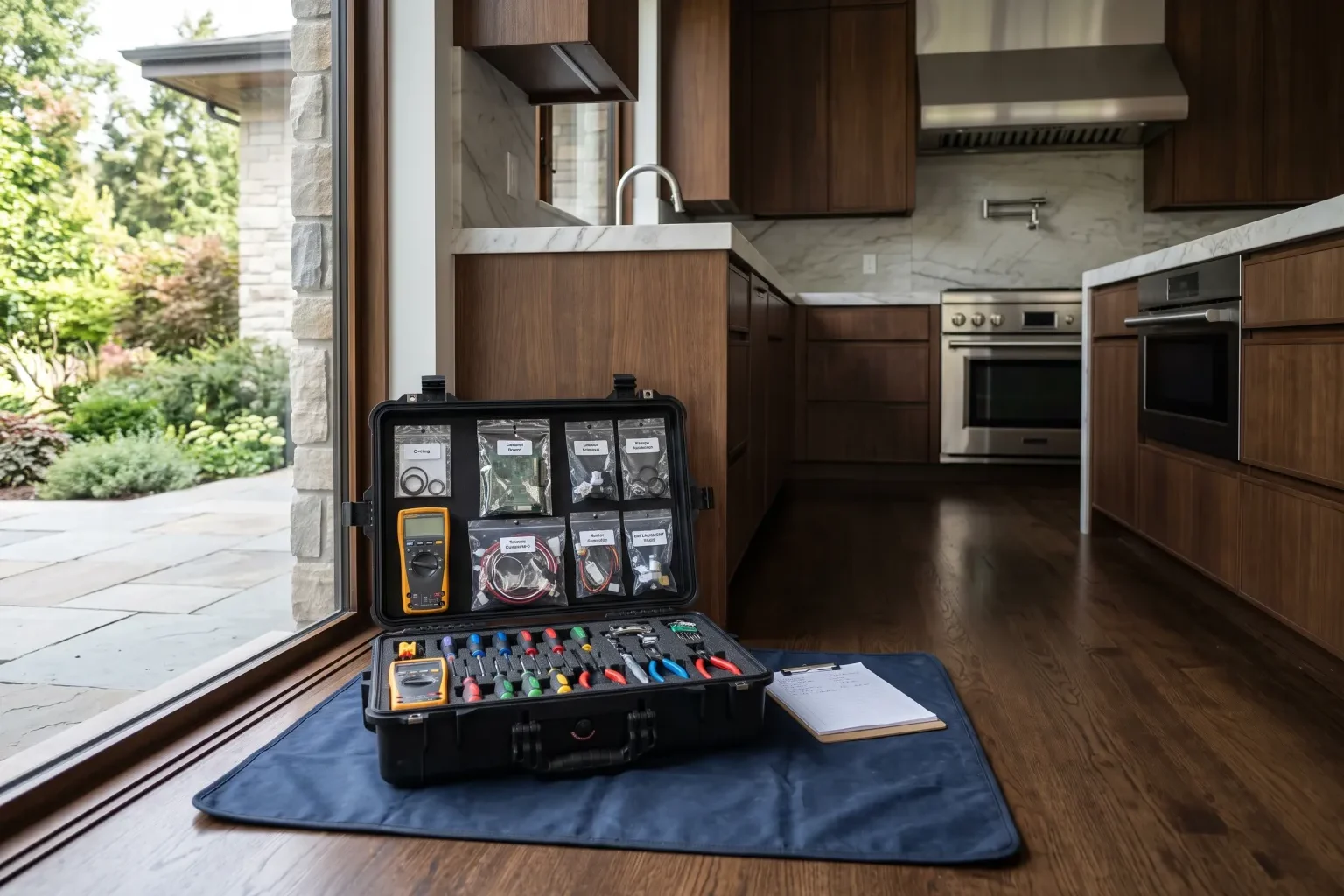
What our technician checks on a built-in or professional-style grill
We start with safety and gas supply. That means checking the shutoff, the hose or hard line, the regulator, and the connections for leaks, then confirming the grill is set up for the right fuel. A natural-gas grill running on the wrong orifices, or a propane unit with a failing regulator, will never burn correctly no matter how many other parts are replaced.
Next we look at ignition: the igniter electrodes, wiring, spark gap, battery or transformer power, and the module itself. Then we pull the grates and flame tamers to inspect each burner for cracks, rust-through, clogged ports and blocked venturi tubes. Spiders and insects are a common cause of weak or yellow flames. We also check the valves and knobs, the infrared and rotisserie burners, the grease management system, and the condition of the firebox and hood.
For built-in units, we note how the grill sits in its island, whether ventilation openings are clear, and how much room we have to pull the grill forward when access to the valve manifold or gas connection is needed.
How Sub-Zero, Viking, Wolf and Thermador equipment differs
Sub-Zero doesn't build grills, but many outdoor kitchens pair a grill with a Sub-Zero outdoor refrigerator or undercounter unit. Those units run hard in summer heat, so we often see condenser coils clogged with dust and leaves, failing door gaskets, and temperature problems that show up during heat waves. If your grill and refrigerator share an island, we can look at both on the same visit.
Viking outdoor grills often come up with ignition problems and wear on burners and the components around them, especially on units that have spent years exposed to weather. Rotisserie and infrared burners are another common call, along with knobs and valves that stiffen over time.
Wolf outdoor grills are heavy, solidly built units, so the repairs we see tend to involve ignition parts, the infrared sear burner, lighting and grease buildup rather than the structure itself. Their components are designed to be serviced, which helps keep a well-maintained Wolf grill going for a long time.
Thermador is primarily an indoor cooking brand. We service Thermador pro-style rangetops and ranges, including griddle sections, which share the same basics as an outdoor grill: igniters, gas valves, burner ports and even heat across a cooking surface.
Tell us what your appliance is doing.
Repair or replace a high-end grill?
On a premium built-in grill, repair is usually the better choice. Igniters, burners, valves, regulators, knobs and flame tamers are replaceable parts, and fitting a new grill into an existing island can mean matching a precise cutout, reworking the gas connection and possibly modifying stonework or cabinetry.
Replacement starts to make sense when the firebox or hood is rusted through, the housing is warped from repeated grease fires, or parts for an older model are no longer available. We will tell you what we find and give you an honest view of whether a repair is worth it, so you can decide.
What affects the cost of a grill repair
We don't quote over the phone without seeing the grill, because the cost depends on the specific problem. The main factors are the fault itself, which parts are needed and whether they are in stock or must be ordered, and how many components have worn out at the same time.
Access matters too. A freestanding cart grill is quick to work on. A built-in unit in a custom island, with a gas connection hidden behind masonry or tight cabinetry, can take more time to reach safely. After the diagnosis, we explain the repair and the cost before any work begins.
How a service visit works
When you contact us, tell us the brand, model if you have it, and what the grill is doing. We schedule a visit and arrive with common ignition and burner parts for the brands we service. The technician checks gas safety first, diagnoses the problem, and walks you through what failed and what we recommend.
If you approve, many repairs are finished during the first visit. If a part has to be ordered, we schedule a return trip once it arrives. Before leaving, we test every burner, confirm the flames look right, and share a few simple maintenance tips for your setup.