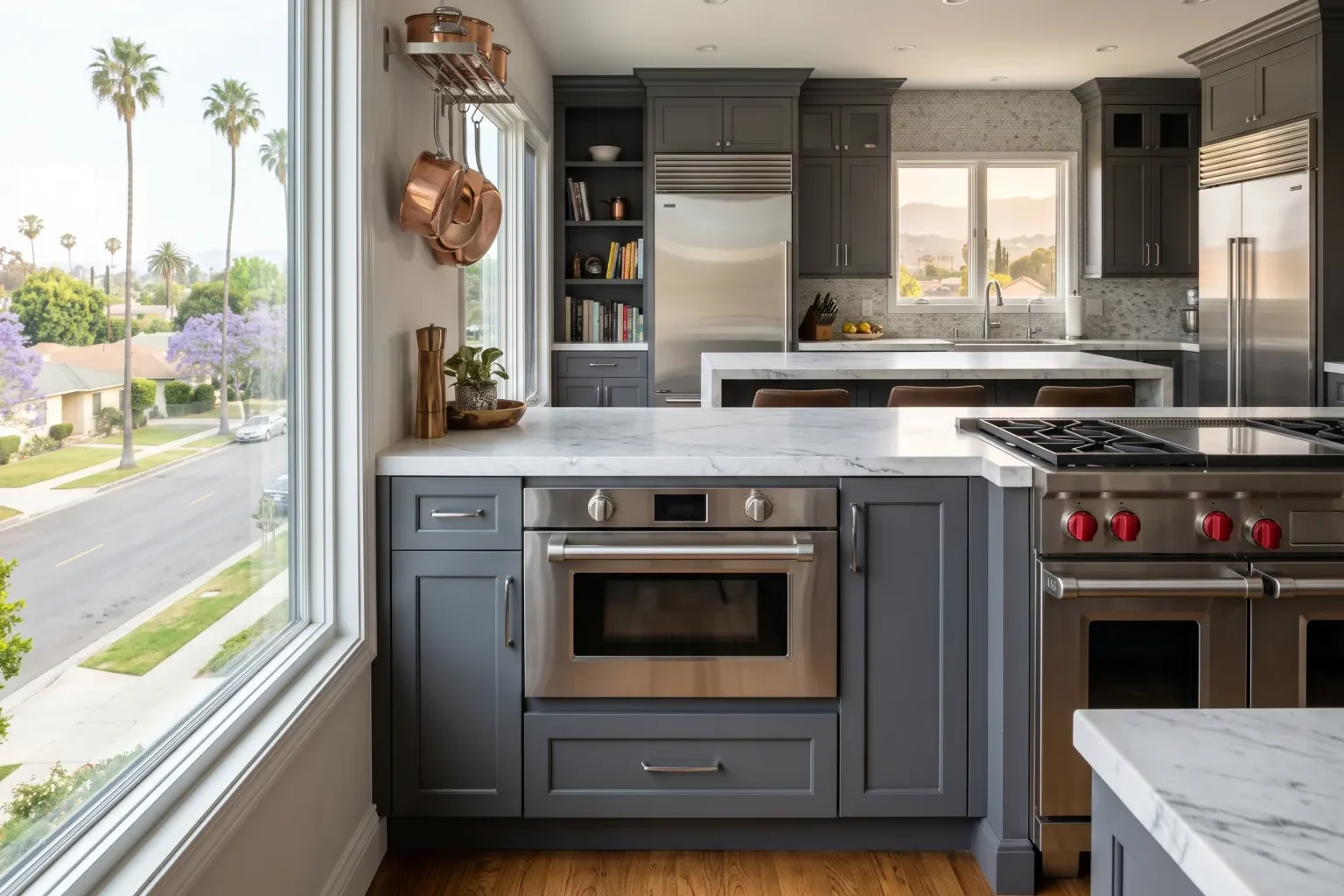



The short answer
Most microwave drawer problems, such as a drawer that won't open, no heat, or dead touch controls, come from a specific part like the drawer motor, a door switch, the magnetron, or the control board, and are usually repairable. A technician diagnoses the unit in place in your cabinetry, then you decide on the repair with a clear explanation of the fault and parts involved.
A microwave drawer is easy to love until it stops opening, stops heating, or starts showing an error you can't clear. Because it's built into an island or lower cabinet, you can't just unplug it and set a new one on the counter. Gleadale Appliance services repairs built-in microwave drawers in Glendale homes and nearby cities, including the Wolf, Viking and Thermador drawers that so often sit a few steps from a Sub-Zero refrigerator. We're an independent repair company, not affiliated with any manufacturer. Our goal is to find the actual fault, explain it plainly, and help you decide whether fixing the unit makes sense.
Issues we fix
Microwave drawers combine a standard microwave with a motorized drawer, so problems fall into two groups: the cooking side and the drawer mechanism. These are the symptoms homeowners most often call about.
- Drawer won't open or close, or stops partway and reverses
- Drawer opens on its own or doesn't seal fully when closed
- Runs, lights up and sounds normal, but food doesn't heat
- Heats unevenly, or much more slowly than it used to
- Sparking, arcing or a burning smell inside the cavity
- Touch controls unresponsive, or only some keys work
- Error codes on the display that return after a reset
- Grinding, clicking or straining noises from the drawer motor
- Cooling fan keeps running long after cooking ends
- Unit trips the breaker or blows a fuse when started
- Interior light out, or the display is dim or blank
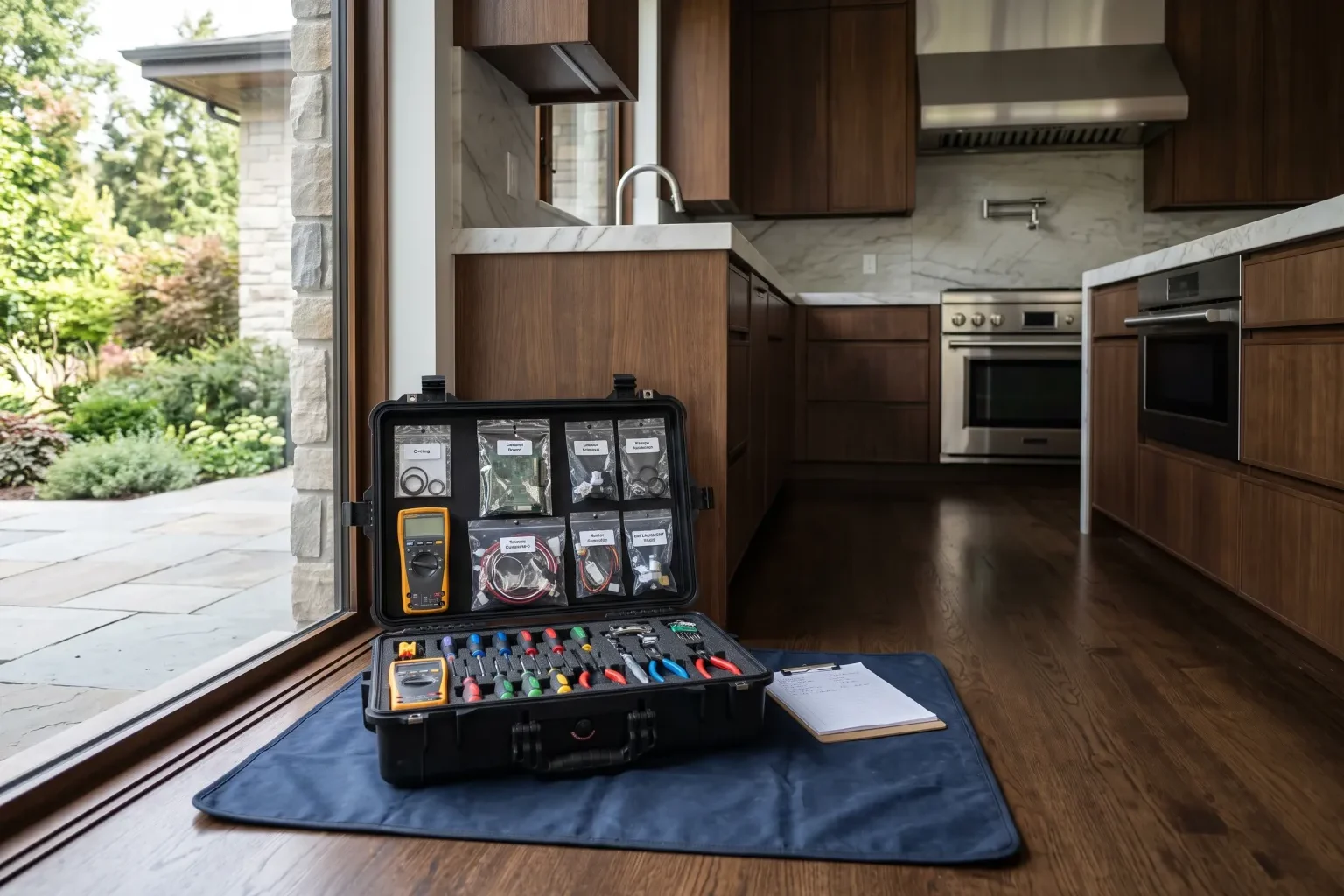
What our technician checks on a built-in unit
A microwave holds a high-voltage capacitor that can store a dangerous charge even when unplugged, so we don't recommend opening one yourself. Our technician starts by confirming the symptom, noting any error codes, and checking power at the outlet and breaker. If the drawer is the problem, we look at the drawer motor, gear rack, slides, position sensors and the obstruction sensing that tells it to stop and reverse. A small item fallen behind the drawer or debris in the track can cause what looks like a motor failure.
For heating problems, we safely discharge the capacitor and test the high-voltage circuit: magnetron, capacitor, diode, transformer and fuse. We also test the door interlock switches, which are a frequent cause of no-heat and no-start problems because they must all register a closed drawer before the unit will cook. Control faults lead us to the touch panel, ribbon connections and control board. We also check ventilation clearance in the cabinet, since a drawer that runs hot can wear out parts faster.
How Wolf, Viking and Thermador drawers differ
Sub-Zero makes refrigeration rather than microwave drawers, but in many Sub-Zero kitchens the matching drawer is a Wolf, from the same family of brands. Viking and Thermador drawers are common in professional-style kitchens as well. All of these share the basic design of a microwave cavity in a motorized drawer, so drawer mechanism faults, door switches and control panel issues show up across brands.
Where they differ is in the details that matter for repair: how the unit mounts and slides out of the cabinet, the layout of the control panel, the error codes each one displays, and which parts are available for older model numbers. Some models are easier to service in place, while others need to come partly out of the opening. Knowing the specific model before the visit helps us arrive prepared, so please find the model and serial number label if you can. It's usually visible when the drawer is open.
Tell us what your appliance is doing.
Repair or replace a high-end microwave drawer
On a premium unit, repair is often the better choice. Replacing a built-in drawer isn't a simple swap. A new model may not match your cabinet cutout, trim, or the finish of your other appliances, and that can turn a single repair into a cabinetry project. Parts like door switches, the drawer motor or a fuse are usually straightforward to replace.
Replacement deserves a closer look when a major part such as the magnetron or control board fails on an older unit, when parts for your model are no longer available, when the cavity or drawer frame is damaged or rusted, or when several components are failing together. We'll tell you what we found and give you an honest opinion. The decision is yours.
What affects the cost of a repair
Every repair is different, so we don't quote before diagnosing the unit. The biggest factor is the fault itself: a cleared drawer track or a single switch is a much smaller job than a magnetron or control board replacement. Part availability matters too, since some components for older or less common models take longer to source.
Access is the other major factor. A drawer set into custom cabinetry, a waterfall island or a tight opening may take more time to remove and reinstall safely without marking surrounding panels. We explain the diagnosis and the parts involved before any repair work begins, so nothing comes as a surprise.
How a service visit works
When you contact us, we'll ask for the brand, model number if you have it, and a description of the symptom, including any error codes. We serve Glendale and nearby cities such as Burbank, Pasadena and La Cañada Flintridge. At the visit, the technician diagnoses the unit in place, protects your floors and cabinetry, and walks you through what's wrong and what it will take to fix.
If the needed part is on hand, we can often finish the repair the same visit. If it needs to be ordered, we'll schedule a return trip once it arrives. Before leaving, we test the drawer's opening and closing, heating and controls so you can see it working.