


The short answer
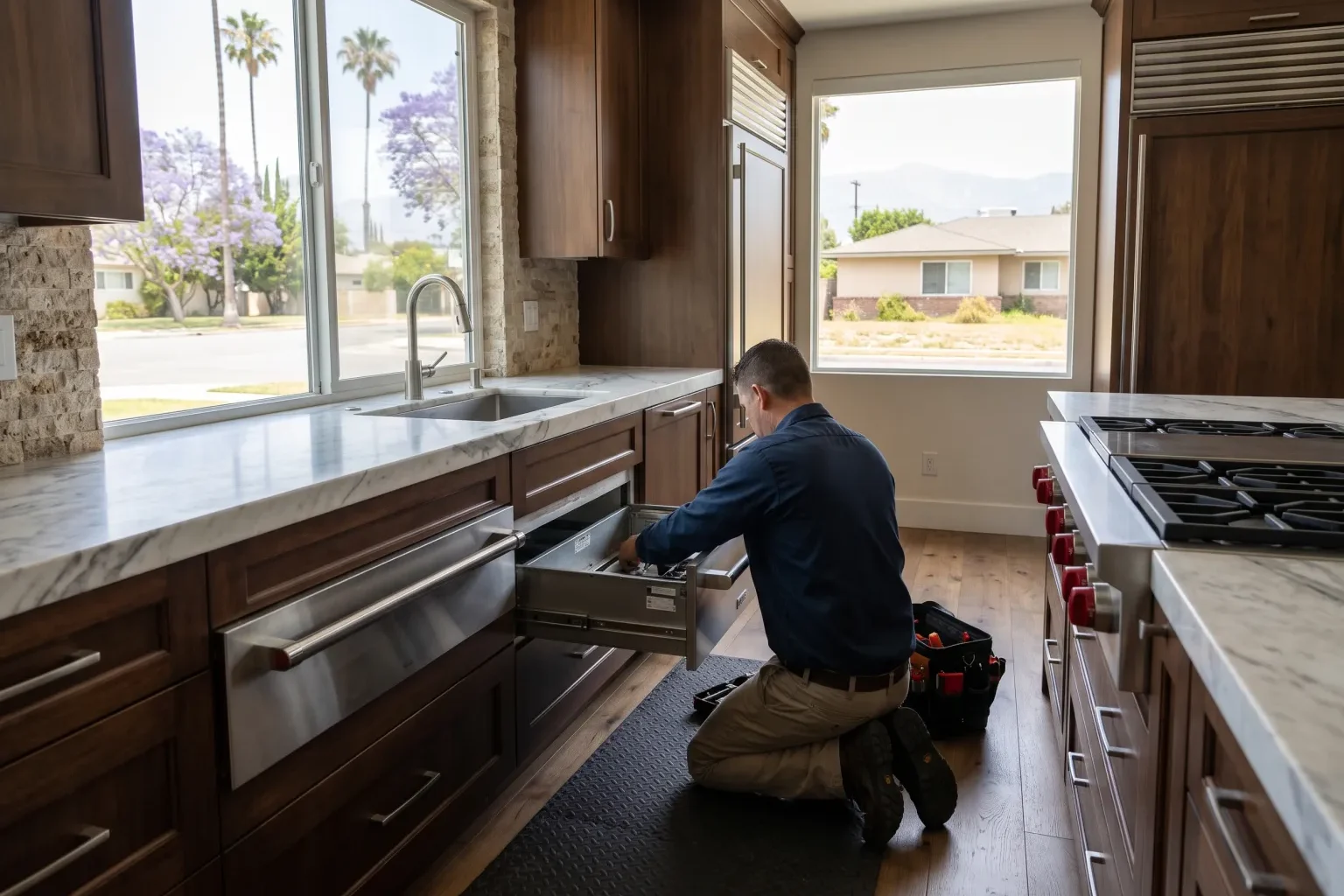
Most warming drawers that won't heat, heat unevenly, or run too hot have a failed element, temperature sensor, control, or thermal fuse, and these are usually repairable. On a built-in high-end unit, repair is often the better choice than replacement because a new drawer has to match the cutout and the rest of the kitchen.
A warming drawer is one of those appliances you don't think about until it stops doing its job: dinner rolls come out cold, plates never warm up, or the drawer runs hot enough to dry out food. We repair built-in and professional-style warming drawers for homeowners in Glendale and the surrounding area, including units installed alongside Sub-Zero refrigeration and drawers from Viking, Wolf, and Thermador. Most warming drawer problems come down to a short list of parts, and a careful diagnosis usually tells us quickly whether a repair makes sense.
Issues we fix
Warming drawers are simple compared with a range or refrigerator, but they still have a heating element, a temperature control, safety devices, and a moving drawer. These are the symptoms homeowners call us about most often:
- Drawer doesn't heat at all, even though the power light comes on
- Drawer won't turn on, with no lights or display
- Uneven heat, with food warm on one side and cool on the other
- Drawer runs too hot or won't hold the selected setting
- Touch controls or knobs don't respond, or the display flashes or beeps
- Moisture setting doesn't work, so food turns soggy or dries out
- Drawer sticks, drags, sags, or won't close fully
- Breaker trips or a fuse blows when the drawer is switched on
- Burning smell or visible damage near the element or wiring
What our technician checks
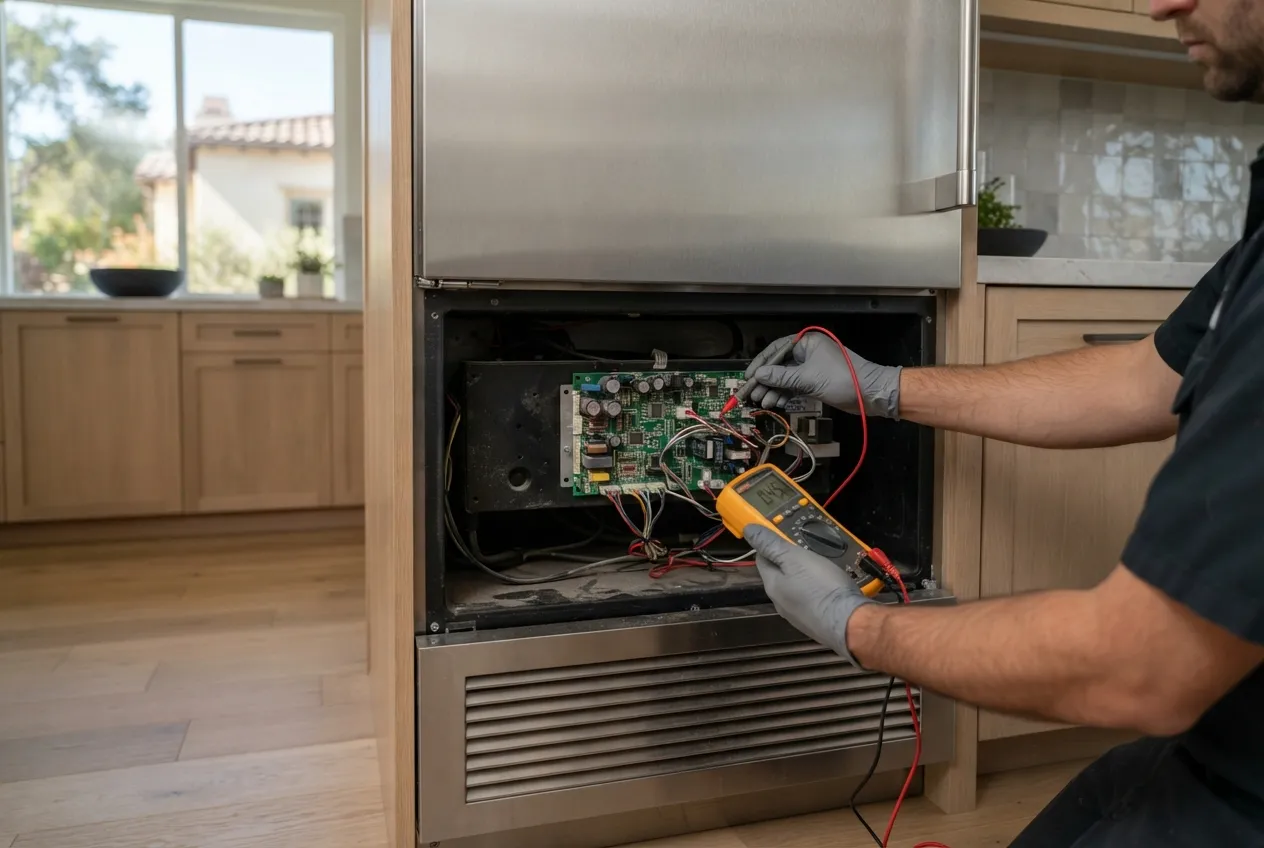
We start by confirming the complaint and checking that the drawer is getting proper power at the outlet or junction box, since a tripped circuit or loose connection can look like a dead appliance. From there, we test the heating element for continuity and resistance, check the temperature sensor or thermostat against its expected readings, and look at the thermal fuse or high-limit cutoff that shuts the drawer down if it overheats.
On units with electronic controls, we check the control board and the touch panel or switches, along with the wiring harness between them. We also inspect the drawer glides, rollers, and door gasket, because a drawer that doesn't seal or close fully will lose heat and can make a working element seem weak. For drawers with a moisture or vent control, we confirm the vent opens and closes as it should.
How Sub-Zero, Viking, Wolf and Thermador drawers differ
Sub-Zero is a refrigeration brand, and its cooking partner within the same company is Wolf, so the warming drawer in a Sub-Zero kitchen is frequently a Wolf unit. Wolf drawers often use electronic controls with a moisture selector, so we pay close attention to the control board, the touch panel, and the vent mechanism, along with the full-extension glides that carry a loaded drawer.
Viking warming drawers span several generations, and many older models use mechanical knob controls. On those, a worn control switch or thermostat is a common culprit, and a burned terminal at the element can cause intermittent heating. Viking drawers that see heavy daily use also tend to show wear in the glides.
Thermador warming drawers are designed to sit flush with wall ovens and other built-in cooking appliances, and many use touch controls and settings that include lower temperatures for tasks like proofing dough. When one of these drawers acts up, we often look at the sensor and control electronics before the element. Whatever the brand, the model and serial number tell us which parts apply, so we check that first.
Tell us what your appliance is doing.
Repair or replace a high-end warming drawer?
For most premium warming drawers, repair is the practical choice. The parts that typically fail, such as elements, sensors, fuses, switches, and glides, are replaceable without removing much of the cabinetry. The drawer's housing, insulation, and front panel rarely wear out, so a repaired unit can keep working for a long time.
Replacement starts to make sense when the control board and element have both failed, when a needed part is discontinued with no workable substitute, or when there is damage from water or a wiring fault inside the housing. Keep in mind that a new drawer has to fit the existing cutout and match the surrounding appliances and panels, which can add work. We'll explain what we find and give you an honest recommendation, and the decision is yours.
What affects the cost of a repair
We don't quote a price before we know what's wrong, because warming drawer repairs vary. The biggest factor is the fault itself: replacing a glide or a thermal fuse is a different job from replacing a control board. Part availability matters too, since some components for older Viking or Thermador models take longer to source than current Wolf parts.
Access is the other major factor. A drawer installed under a wall oven or behind a custom panel may need to be pulled from the cabinet carefully to reach the wiring and electrical connection, and that takes more time than a standard installation. After the diagnosis, we explain the repair and its cost before any work begins.
How a service visit works
When you contact us, we'll ask for the brand, model if you have it, and what the drawer is doing. That helps the technician arrive prepared. At the visit, the technician confirms the problem, tests the components, and explains the cause in plain terms along with your options.
If you approve the repair and we have the part on hand, we can often finish the same visit. If a part needs to be ordered, we'll schedule a return trip once it arrives. Before leaving, we run the drawer through its settings to confirm it heats evenly, holds temperature, and opens and closes smoothly.